
LEGAL ANALYSIS
Understanding the legal landscape during infectious respiratory disease outbreaks.
Our legal team is analyzing how agricultural worker protection laws, policies, and guidance implemented during periods of infectious respiratory disease outbreaks affected the respiratory health of farmworkers.

Essential farmworkers experienced varying levels of health protection during infectious respiratory disease outbreaks.
Farmworkers played a pivotal role throughout infectious respiratory disease outbreaks. Their work secured the nation's food supply, sustained farm operations, and boosted the U.S. economy.
Advocates have pushed for government action to protect farmworker health. To date, there are no federally mandated health standards for farmworkers in their workplaces, employer-provided housing, or transportation between the two locations to help prevent the spread of respiratory viruses.
Efforts to evaluate the effects of employer and government action, or inaction, aimed at reducing the spread of infectious respiratory diseases have been limited until now.
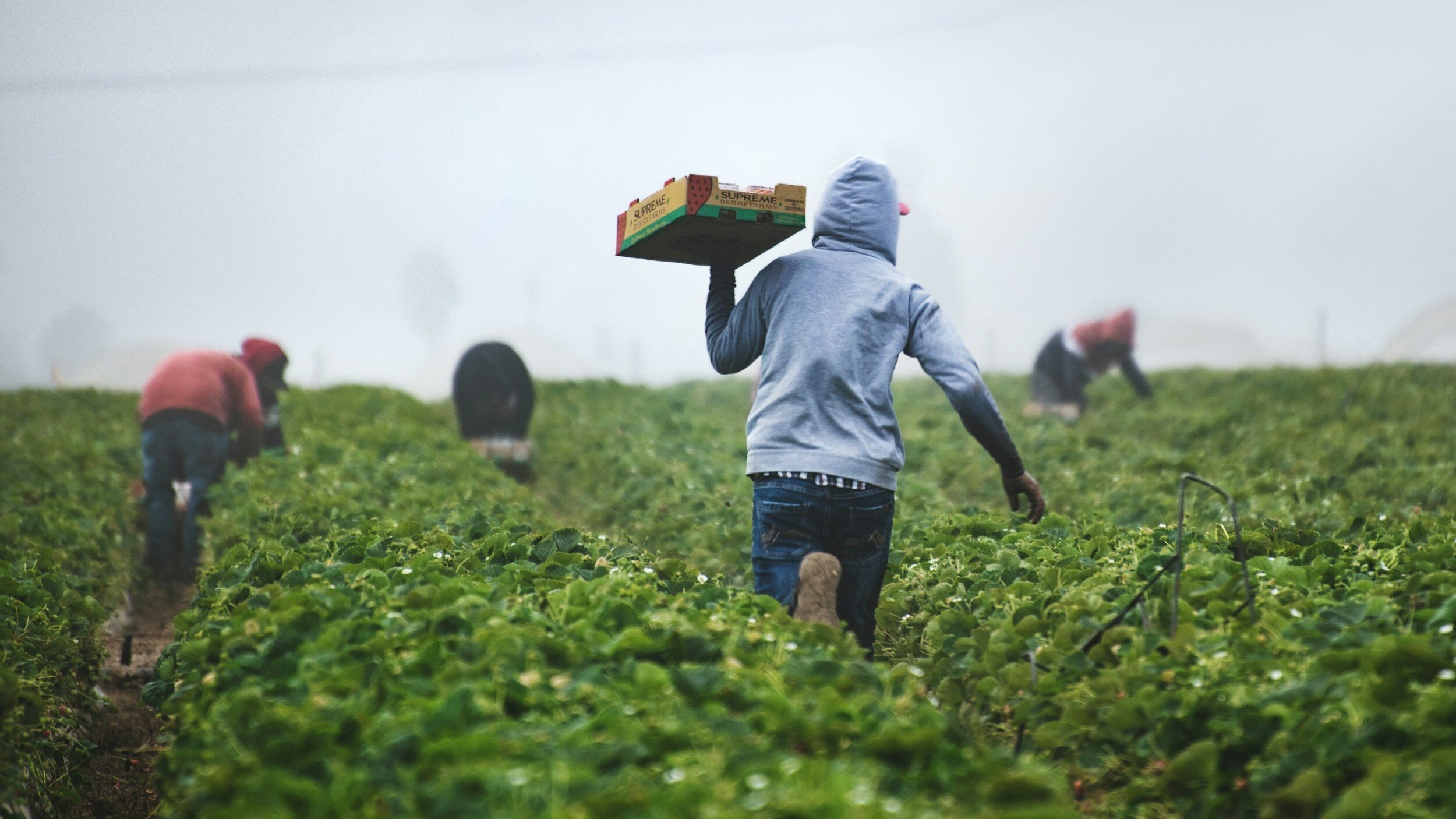
Did you know farmworkers are often exempt from labor laws?
Farmworkers in the U.S. often face exemptions from labor laws designed to protect workers in other industries. These exemptions can leave farmworkers vulnerable to exploitation and unsafe working conditions.
The uneven health outcomes observed during infectious respiratory disease outbreaks result from historically established policy and system gaps built into practices, policies, and systems that continue to put farmworkers at risk.
Varying Livability Standards:
Complex housing livability standards can also negatively impact farmworkers. In Maryland, state standards apply when county standards are lacking, and federal regulations from OSHA and ETA apply to temporary labor camps.
Exemptions from Labor Laws:
The federal Fair Labor Standards Act (FLSA) excludes agricultural workers from overtime pay requirements.
Small farm owners are exempt from implementing federal minimum wage provisions for their workers.
In Maryland, farmworkers are entitled to overtime pay after working at least 60 hours per week, as opposed to the 40 hours applicable to other workers.
Certain child labor protections don’t always extend to minors working in agriculture, despite ranking among the country’s most dangerous industries, leaving young workers unprotected from performing hazardous agricultural tasks.
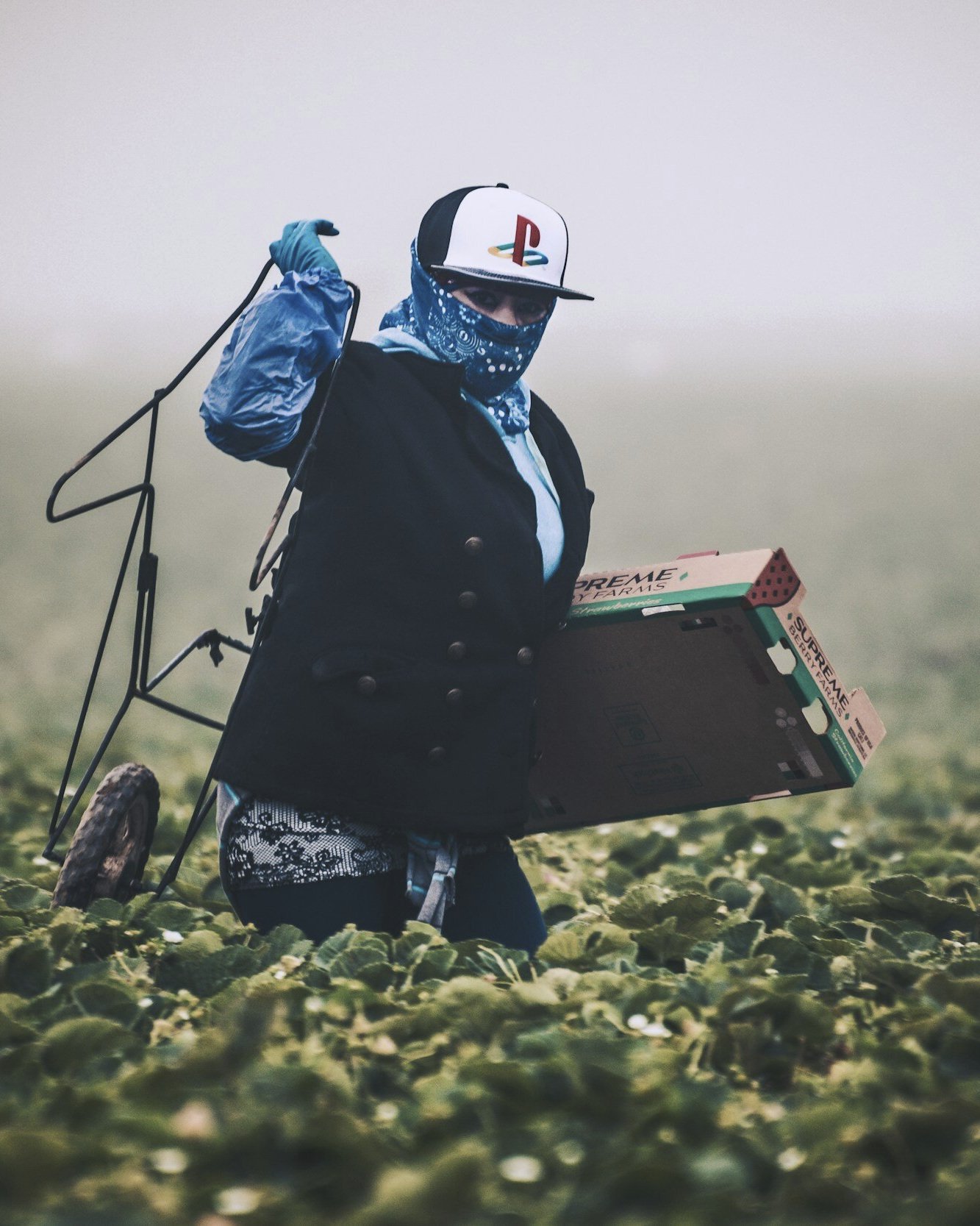
Addressing the gaps in farmworker protections.
Our study seeks to understand the complexity of the agricultural labor system and its relation to the health of workers in this industry by analyzing how various laws and practices affect the respiratory health of migrant farmworkers. Currently, little analytical evidence exists comparing the effectiveness of specific interventions aimed at protecting the health of farmworkers.
We are examining how the interplay of public health, labor, and employment immigration laws creates vulnerabilities among migrant farmworkers, explaining why and how they experienced disproportionately high rates of infectious respiratory illness compared to other workers.
Our goal is to discern changes in law, policies, and employer rules that would be most effective in combating the spread of infectious respiratory diseases among farmworkers in the future.
Methodology
Our study employs a quasi-experimental design, drawing upon existing studies evaluating the impact of behavioral interventions on preventing the spread of infectious respiratory diseases among the general public.
The aim is to identify and analyze federal, state, and local laws and guidance that governed or informed employment-related health practices in Maryland and other agricultural states throughout periods of infectious respiratory disease outbreaks.
Our team of legal scholars is documenting changes in state policy, or lack thereof, aimed at protecting the health of farmworkers throughout these periods.
Simultaneously, we are conducting an interrupted time series study to examine changes in infectious respiratory disease cases and hospitalizations in the same states during a defined outbreak period. This allows us to understand the relationship between policy changes and health outcomes.
Quasi-experimental designs aim to establish cause-and-effect relationships between independent and dependent variables. These designs are particularly useful when conducting a randomized controlled trial is not logistically feasible or is ethically impractical.
In our study, policies are the independent variables, while infectious respiratory disease cases, deaths, and hospitalizations among the farmworker population are the dependent variables.
Interrupted time series compares changes in a health outcome, such as infectious respiratory disease cases, hospitalizations, and death rates, before and after policies are implemented, while accounting for secular and daily trends in health outcomes.
In our study, the interruptions are represented by the new policies introduced throughout the height of an outbreak period.
Infectious Disease Cases and Hospitalizations
We are obtaining information about daily confirmed respiratory disease cases and deaths at the state and county levels from data maintained by the Center for Systems Science and Engineering at Johns Hopkins University.
Our team is also examining data made available by the U.S. Department of Health and Human Services.
We will examine data from March 1, 2020, through March 1, 2021.
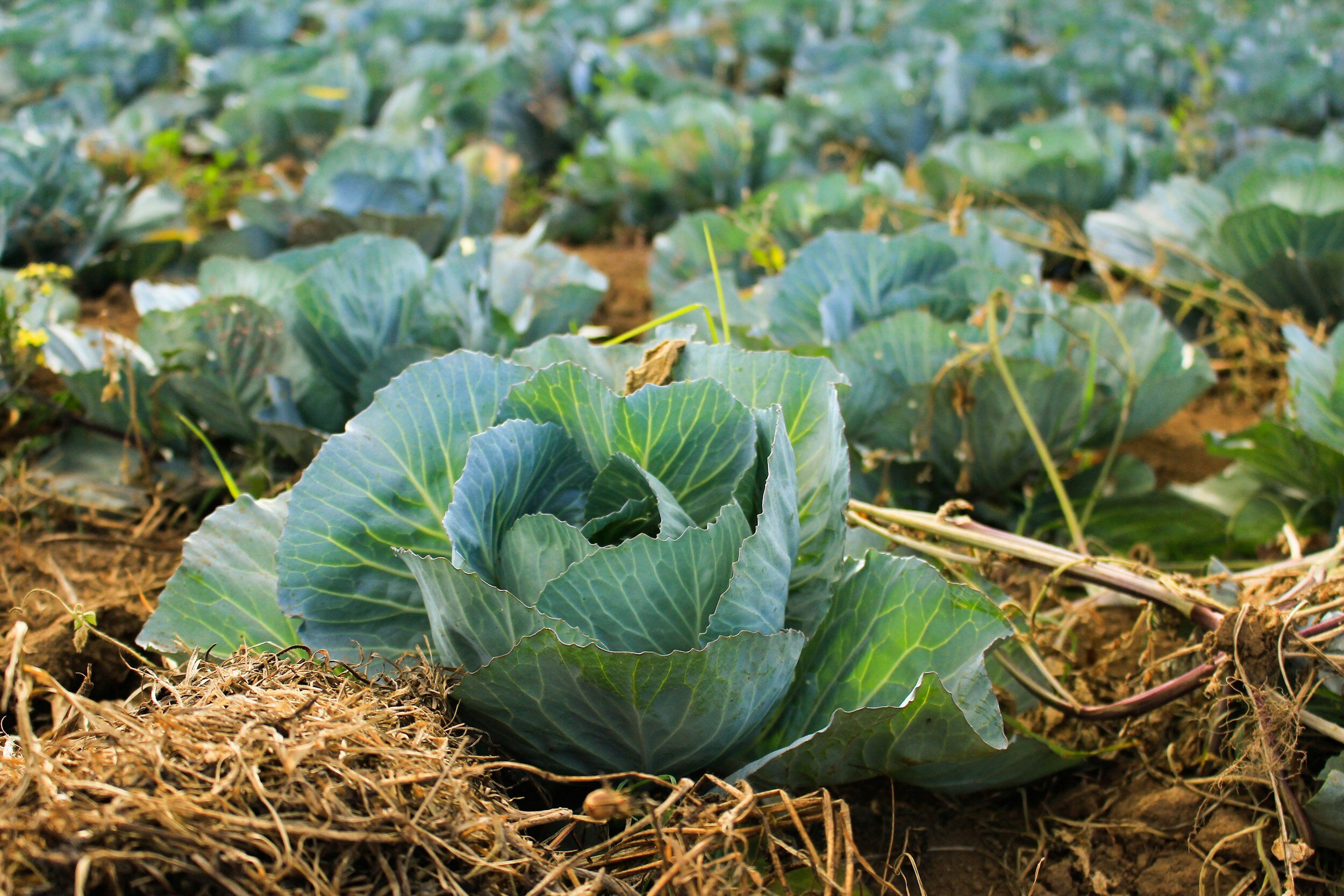
Geographical Focus of Our Legal Analysis
Our legal scholars are focusing on 12 agricultural states and the federal government.
Federal and Maryland state laws
In our first phase of legal analysis, our team delves into understanding the impact of federal and Maryland state laws on infectious respiratory disease outcomes among migrant and seasonal farmworkers throughout Maryland’s Eastern Shore.
Maryland’s neighbors
In the second phase, we will expand our legal analysis to states north and south of Maryland. This includes Delaware, Florida, North Carolina, Pennsylvania, New Jersey, and Virginia. Given the mobility of migrant farmworkers along the East Coast corridor, legislation in one state often influences neighboring states.
Legal variation in agricultural states
The final phase of the analysis explores states with notable legal differences in farmworker protection laws. Arizona, California, Ohio, Oregon, and Washington State are of particular interest due to their unique legal landscapes.